TailCare
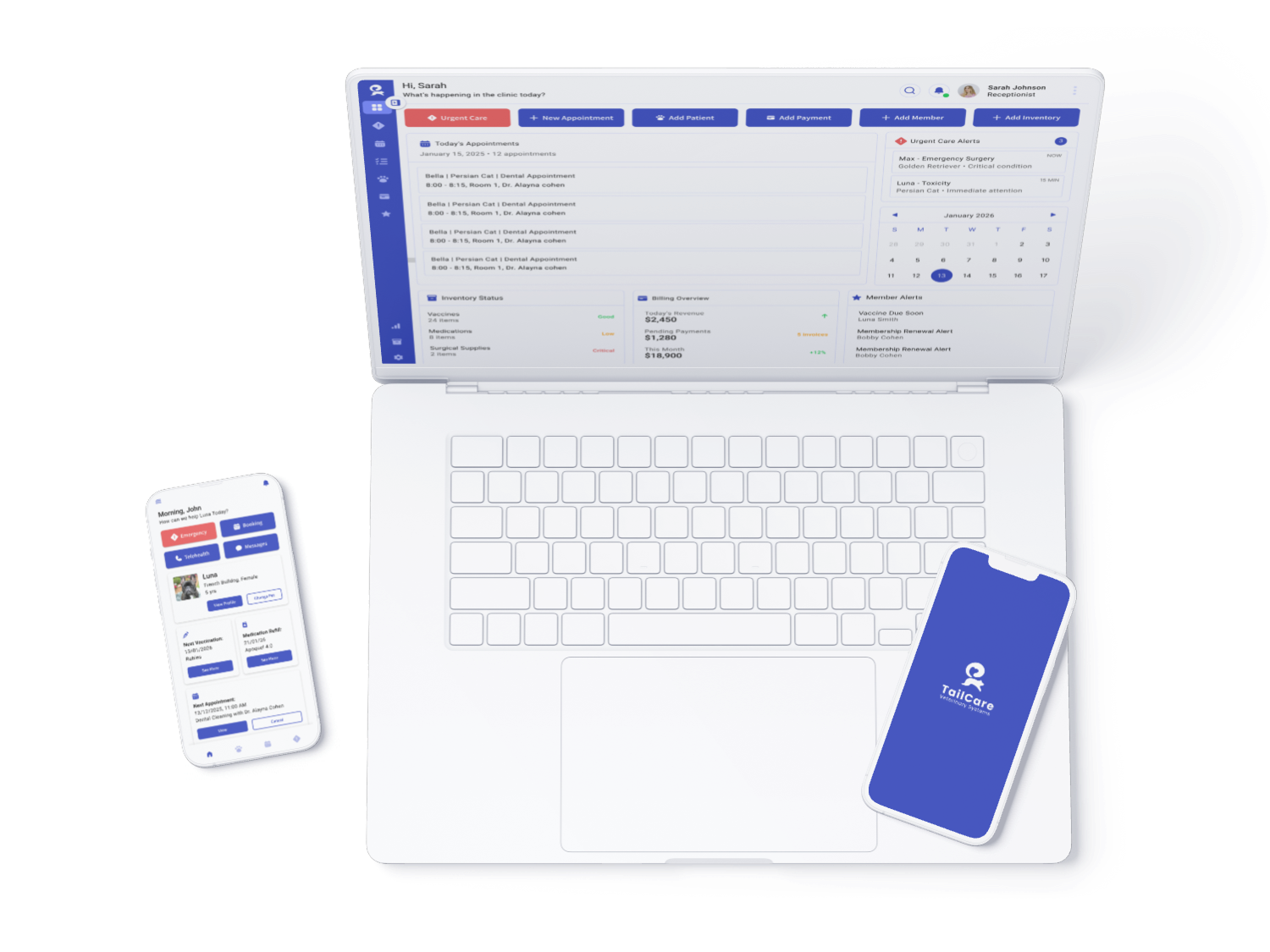
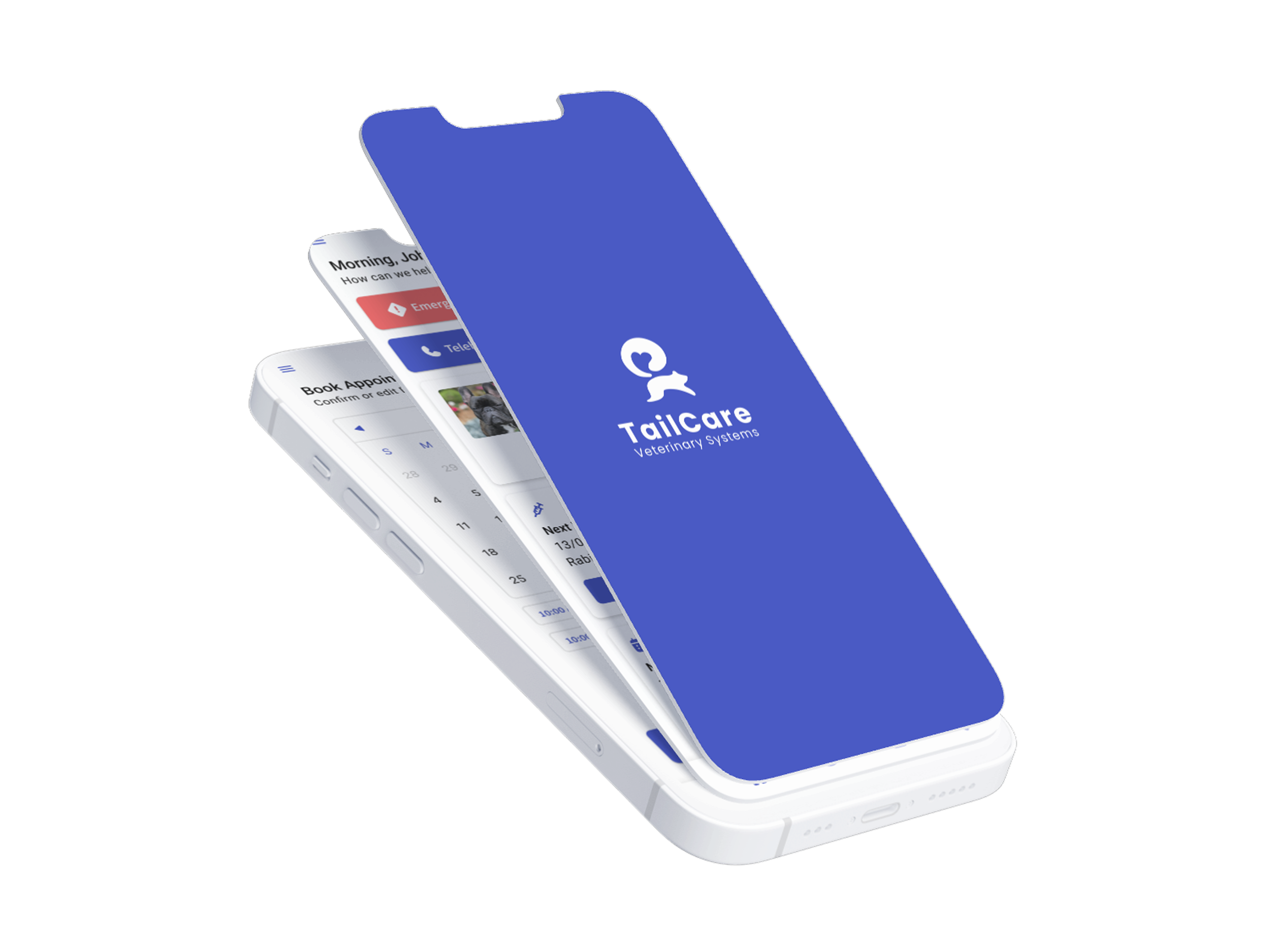
A personal UX/UI project completed during my internship, designing a complex veterinary practice management system accompanied by a mobile app that enables clear communication between clinics and pet owners.
Why this project?
Inspired by my experience working as a medical secretary, I wanted to design a system that reflects the real challenges of managing complex, high-pressure workflows. This project allowed me to practice designing for complexity while applying empathy to both professional users and everyday pet owners with very different needs.
The Problem
Veterinary secretaries rely on outdated systems, paperwork, and phone calls, making it difficult to multitask while providing good service.
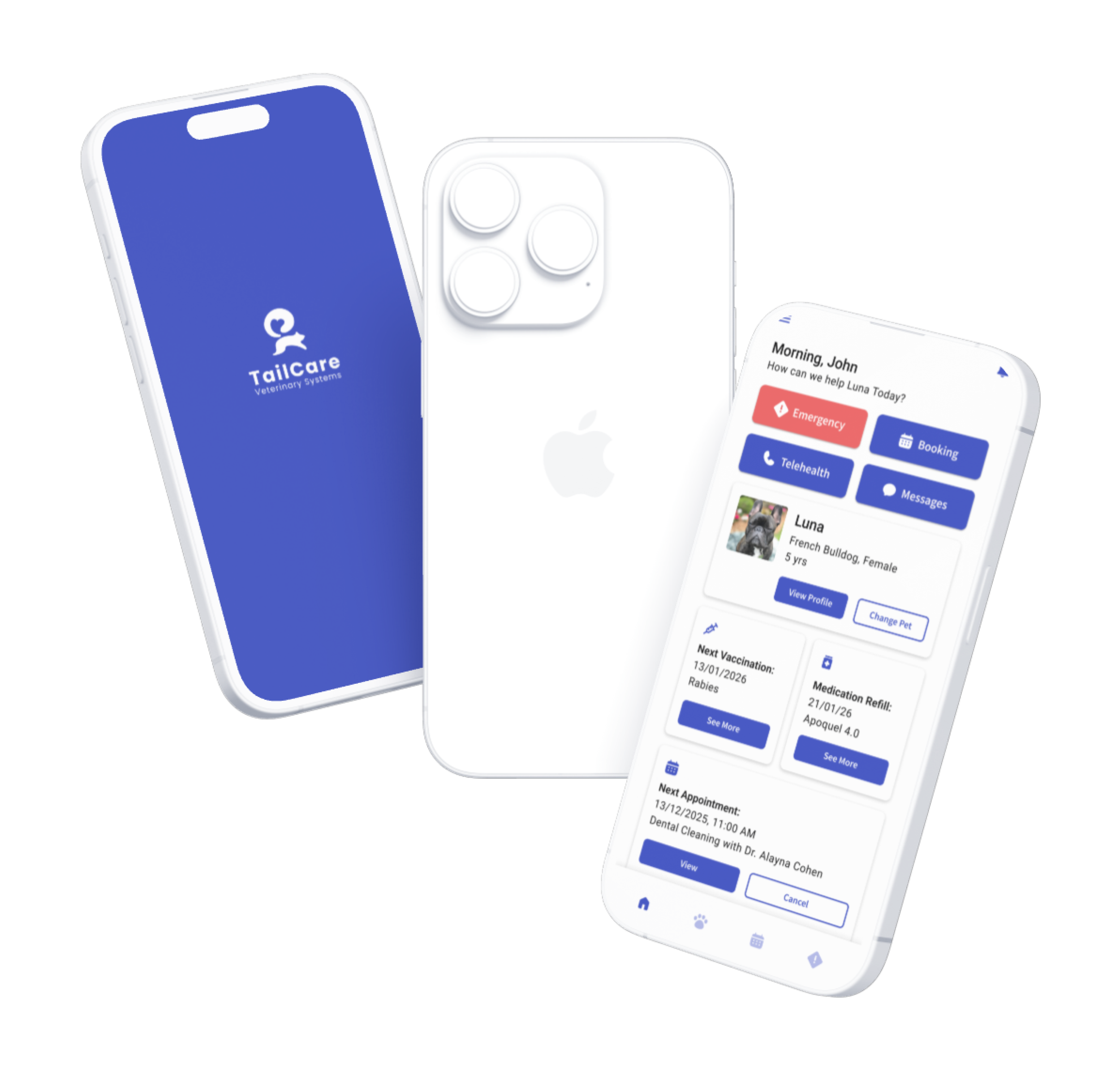
Pet owners frequently experience uncertainty around treatment costs, difficulty booking appointments, and limited options for quick communication with clinics.
This project explores a unified system that reduces administrative burden for staff while improving transparency, convenience, and communication for pet owners.

User Research
To better understand the needs and pain points of both veterinary secretaries and pet owners, I conducted a survey and drew on my own experience working in clinics. Here’s what I discovered:
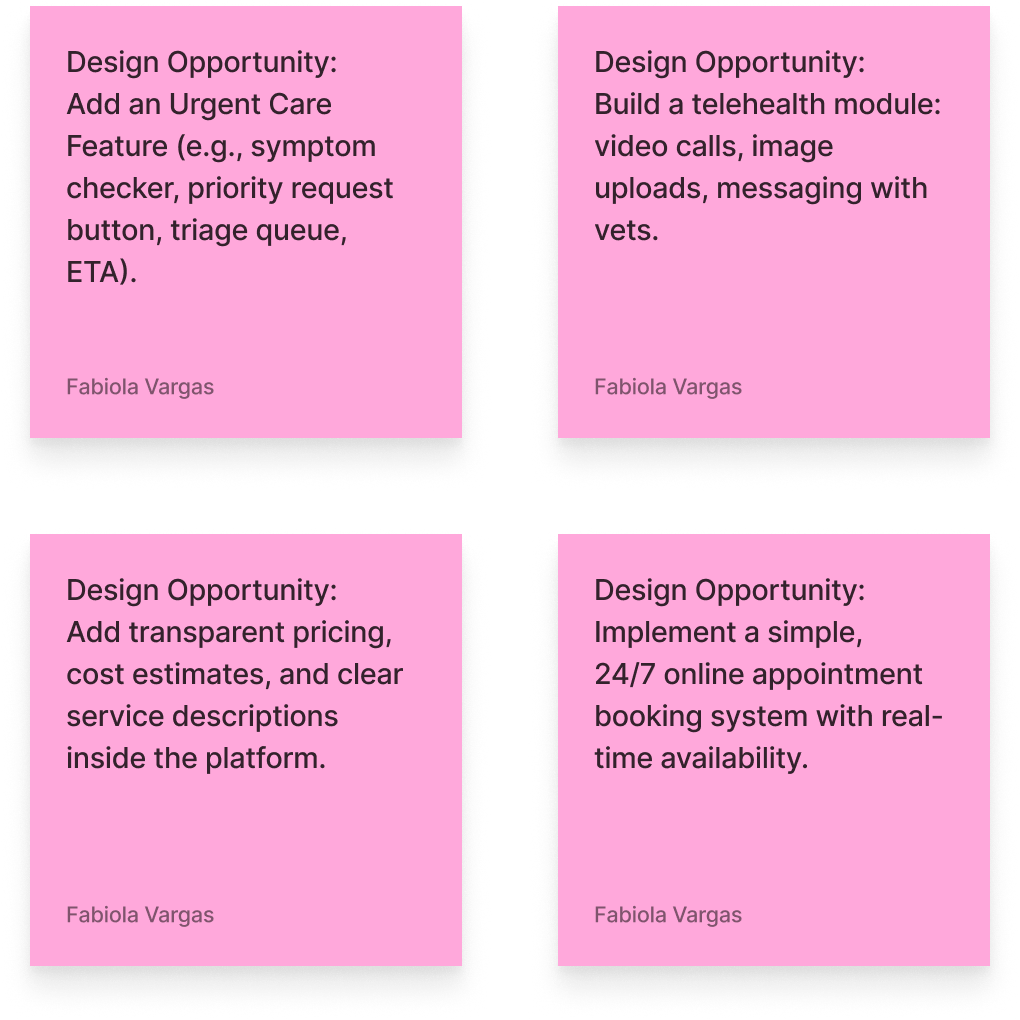
Pet owners showed frustration about uncertainty around treatment costs, difficulty booking appointments, limited options for quick communication, and interest in tele-vet and urgent care features.
Medical Secretaries showed frustration about difficulty multitasking with outdated systems, excessive paperwork, and managing high phone volume while providing good service.
Based on these insights, I brainstormed about what features I can add to the app, and created the first user personas and flows.
Personas
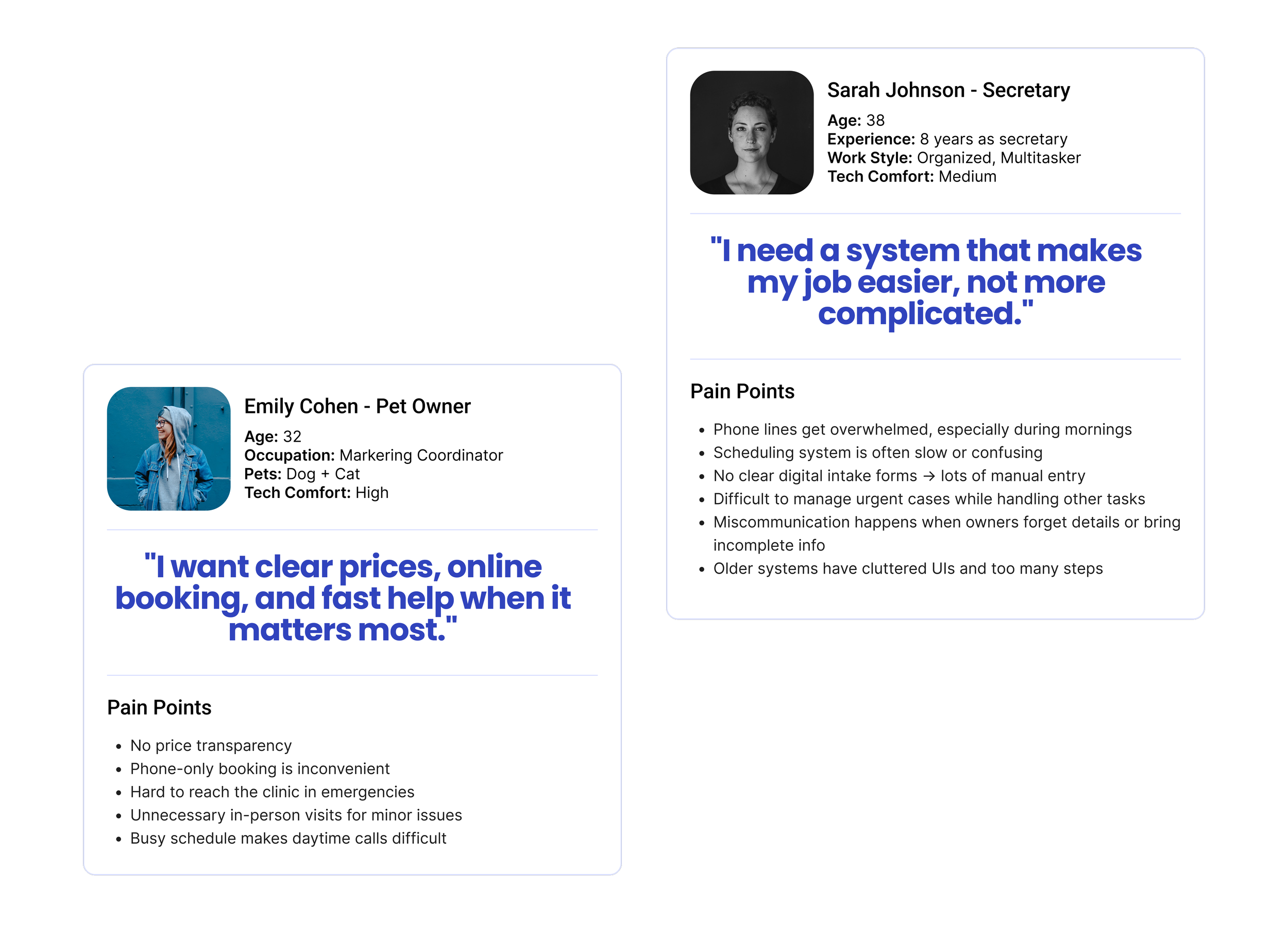
Based on research insights, I created two personas to capture the distinct needs of veterinary staff and pet owners.
Sarah reflects the high-pressure, multitasking environment of a busy clinic, while Emily represents a tech-savvy pet owner seeking clarity, convenience, and quick access to care.
These personas ensured the system addressed both operational workflows and emotional user needs.
User Flows
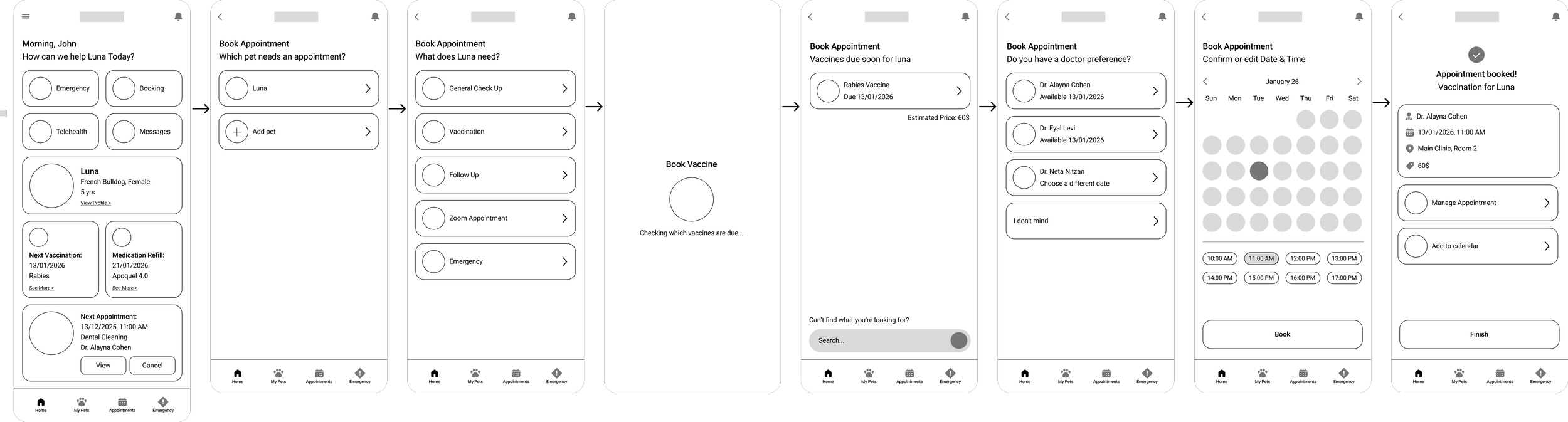
Using the personas as a guide, I created user flows to visualize how secretaries and pet owners interact with the system during everyday and urgent scenarios. Mapping these flows allowed me to simplify complex processes, reduce unnecessary steps, and design a more supportive experience for both users.


Wireframes
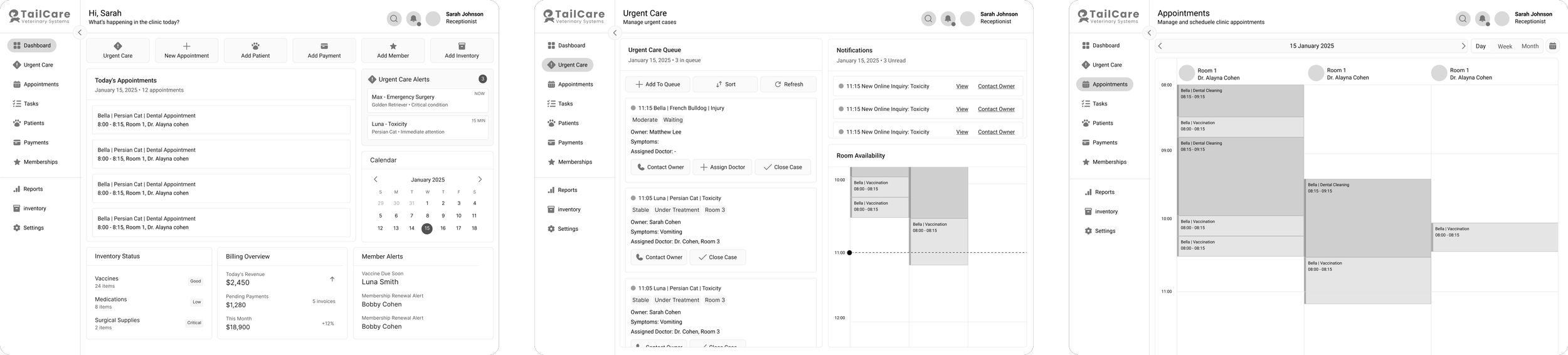
With the core user flows defined, I translated key moments in the experience into low-fidelity wireframes. The focus at this stage was on layout, hierarchy, and system structure - ensuring the interface supported fast decision making and reduced cognitive load for clinic staff.
Final Designs
After validating the core structure through wireframes, I moved into high-fidelity designs. The visual direction focused on clarity, calmness, and approachability—supporting a high-stress clinical environment while remaining friendly for pet owners.
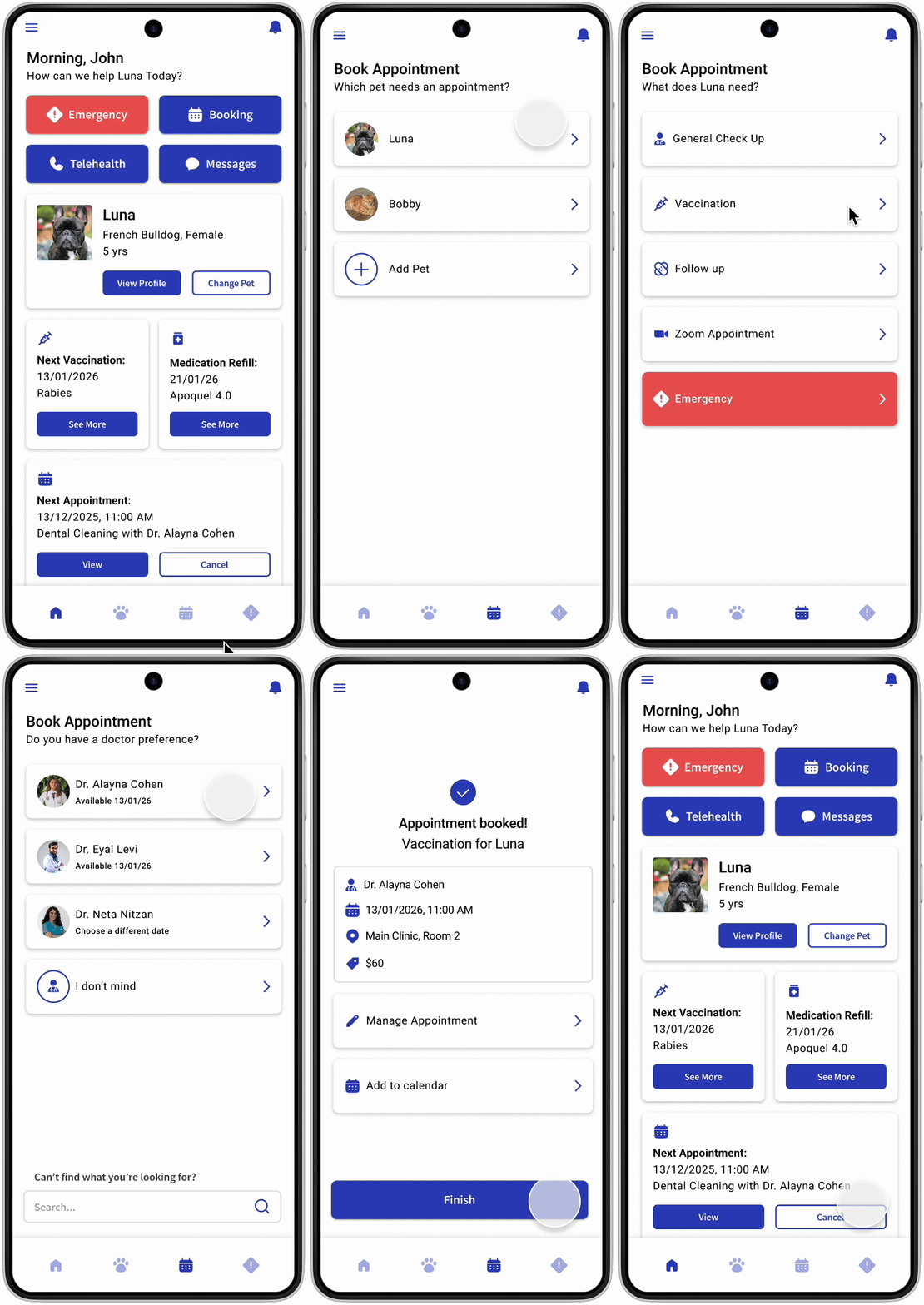
Online appointment booking flow designed to reduce phone calls and streamline scheduling for both pet owners and clinic staff.
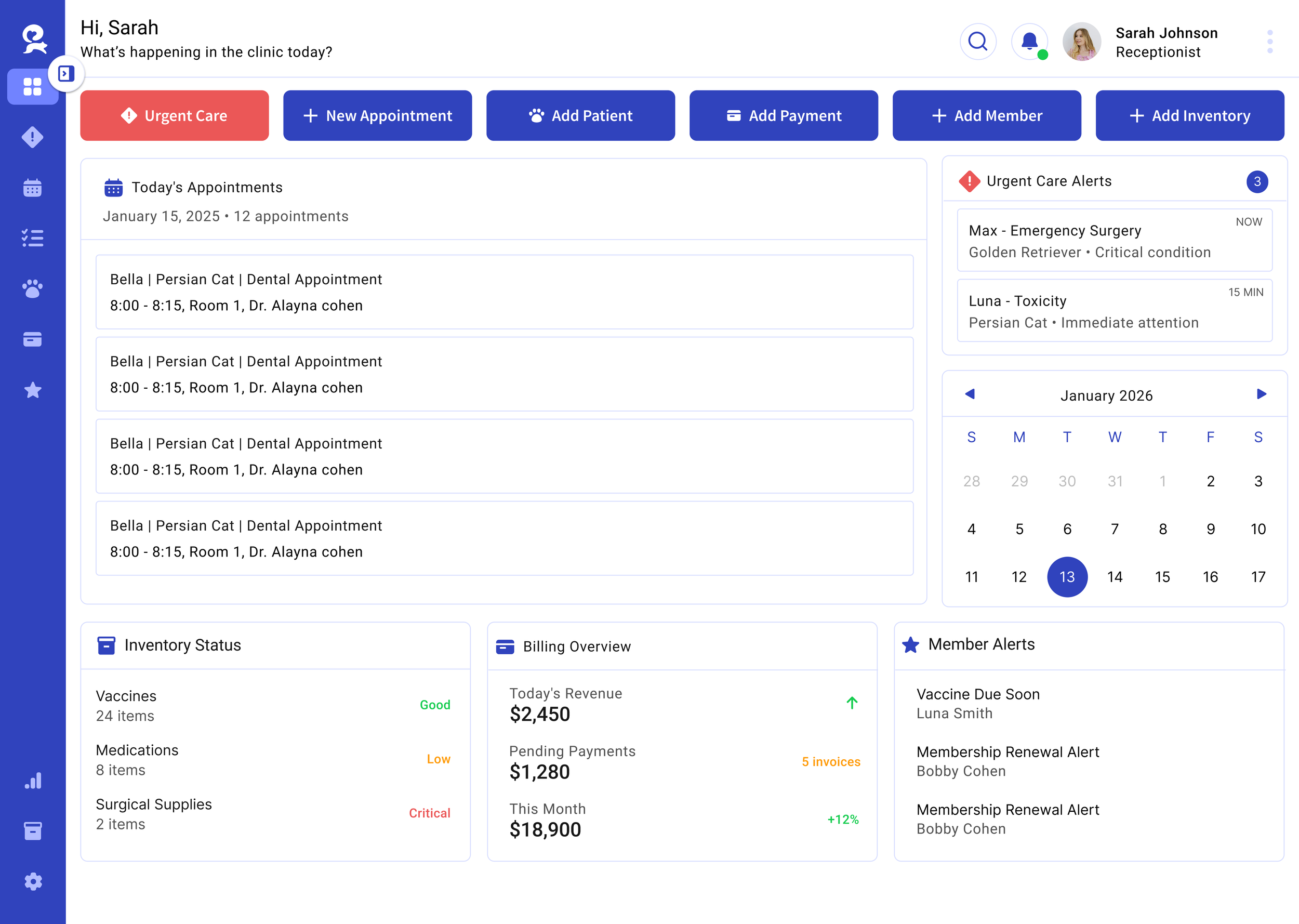
Receptionist dashboard providing a clear overview of appointments, urgent cases, and daily workload to support fast decision-making in a busy clinic.
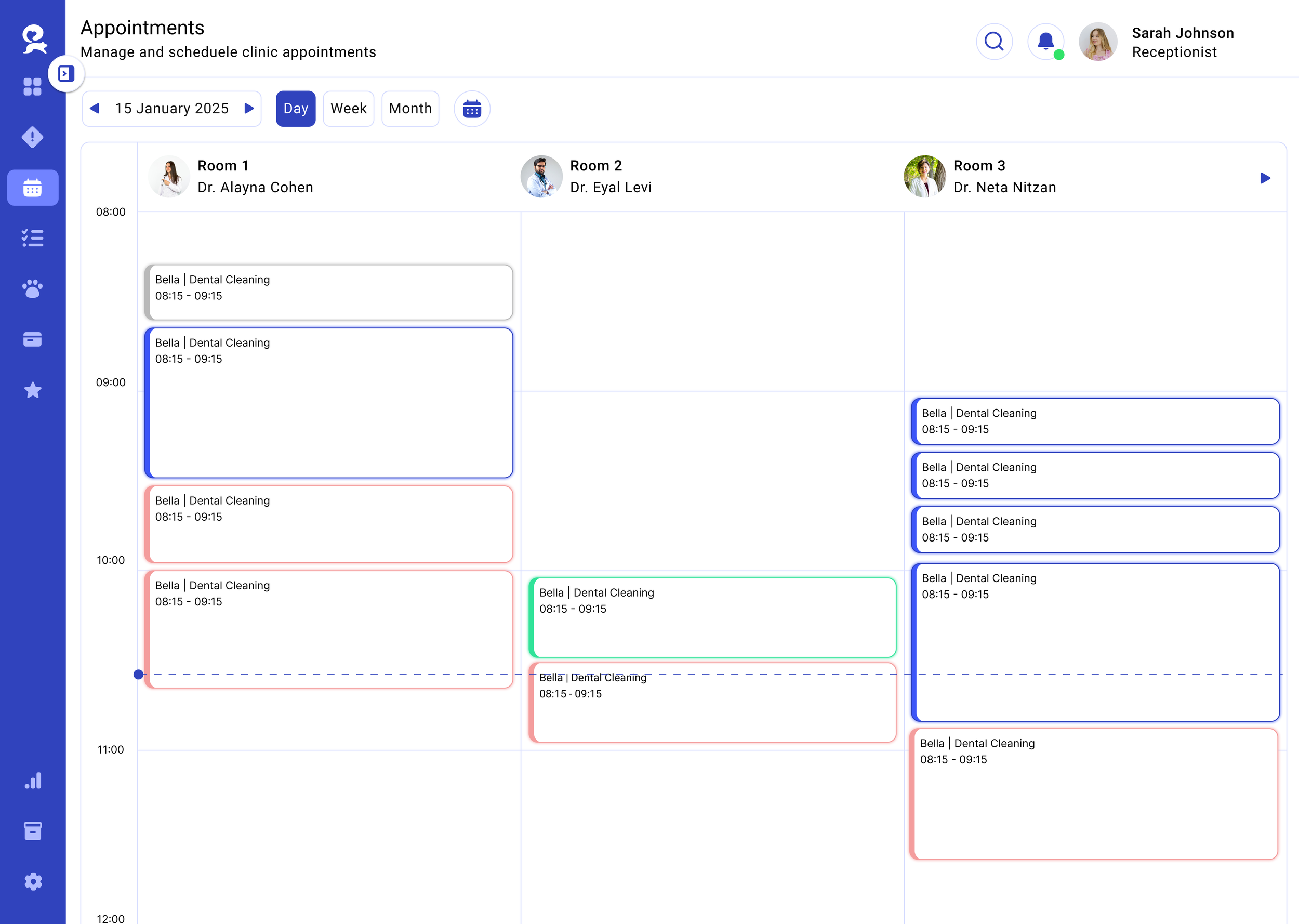
Appointments view with color-coded blocks, room separation, and a calendar layout to help receptionists quickly understand availability and clinic flow.
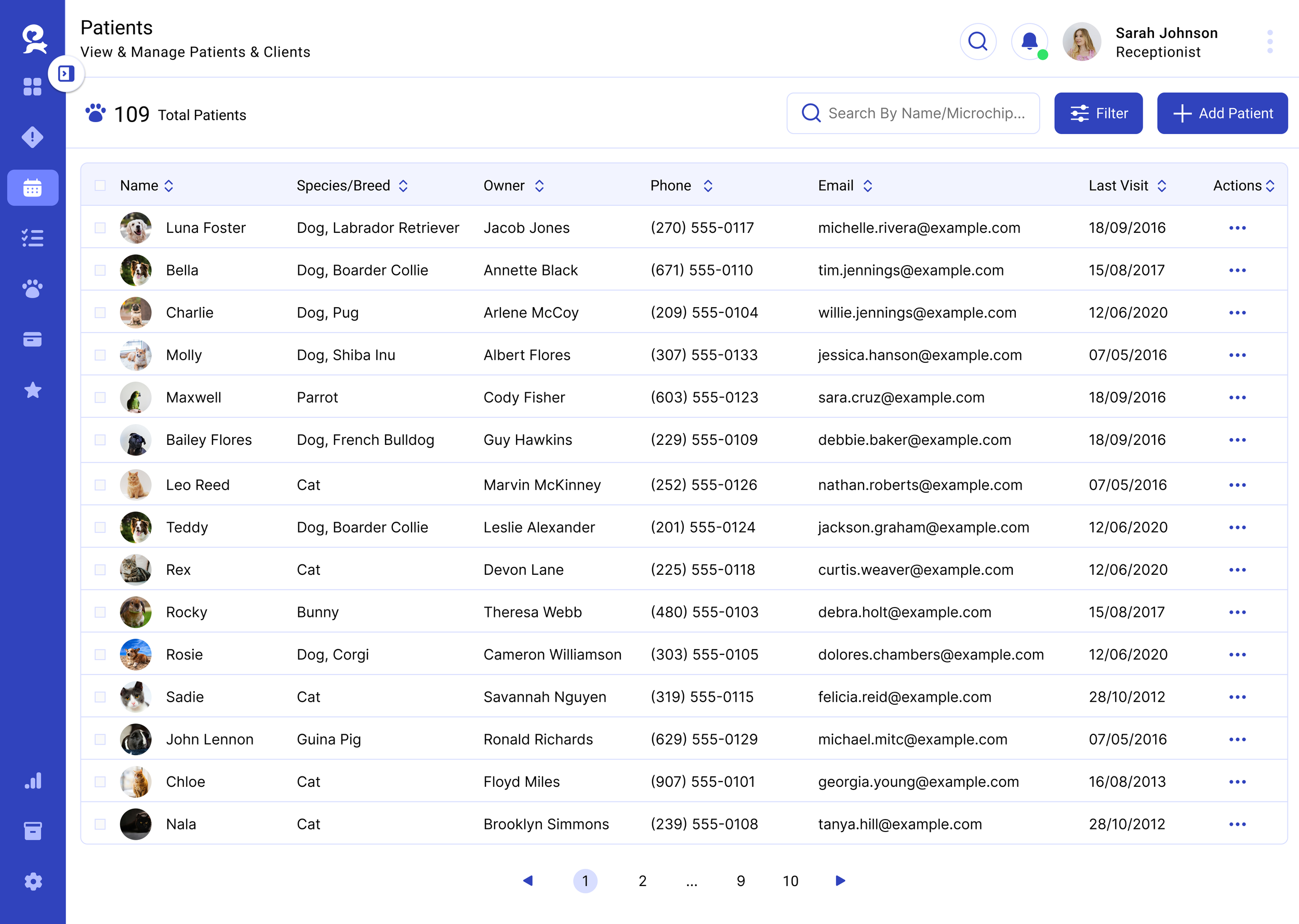
Patient list providing quick access to pet records, status, and key details to support efficient check-ins and follow-ups.
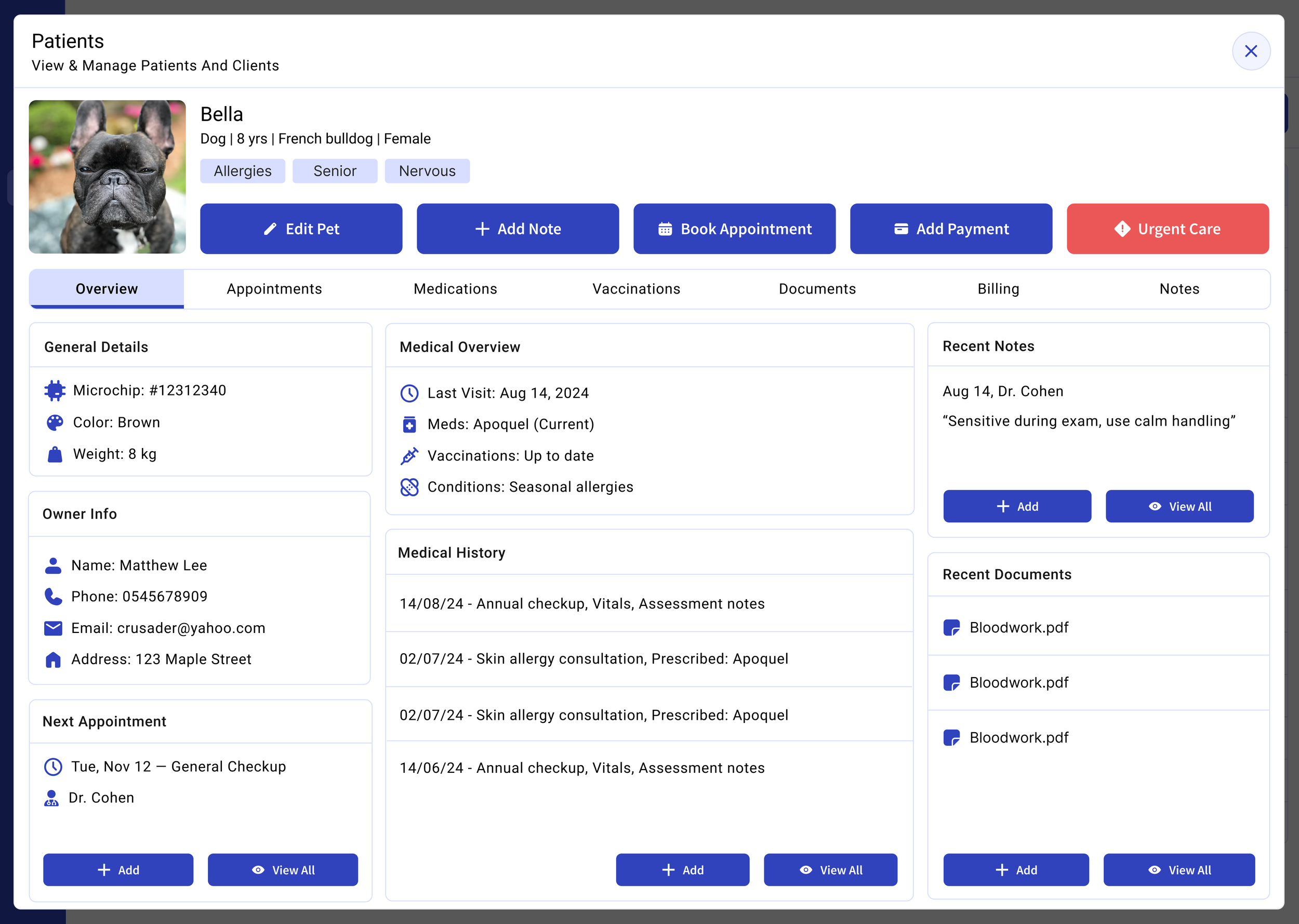
Patient detail screen designed as a quick-access slide in panel, allowing receptionists to handle tasks efficiently while still accessing detailed information when needed.
What’s Next?
Given more time, I would conduct usability testing with veterinary receptionists and pet owners to validate assumptions and iterate on the design. I would also further explore accessibility and edge cases to better support busy clinics and growing practices.